Tuesday, July 13, 2021

Spring In Yellowstone

 Linda and I hadn’t gone on an overnight trip just for fun since the COVID-19 pandemic started, so we decided on a trip to Yellowstone to celebrate her 80th birthday last May.  We were lucky to have beautiful weather, especially since it snowed the day after we left, closing the roads out of there.

Bison herd, Madison River

Now that pandemic restrictions are easing up, there are record crowds at Yellowstone and outrageous prices at motels in West Yellowstone, Montana.  After being stuck in traffic much of our first day we decided on a different strategy for day two, and it worked well.  We stayed in West Yellowstone most of the morning, had a nice restaurant meal for lunch, and took snacks into the park for the evening meal.  The crowds left in late afternoon and we were finally able to find parking spaces at the geyser basins.

Midway Geyser Basin

                                Grand Prismatic Spring

One disadvantage of visiting the park in spring is limited access to many areas because of exposure to bears.  For example, the entire Firehole area was closed because of high levels of bear activity.  As a result, I was unable to visit two sites on my bucket list and we saw just one bear from about a half mile away.  On the other hand, there were plenty of cooperative bison, like this one:

    Midway Geyser Basin Run-off, Firehole River

We visited most of the open attractions on the west side of the park except Old Faithful.  It was crowded and of course we had been there before.  I thoroughly enjoyed some of the lightly used places like Terrace Springs, Sheepeater Cliffs, and Biscuit Basin.  It was also fun to photograph some of the unusual details that may be less obvious than the geysers and blue pools, like dead trees and oddly colored run-off from the hot springs.


Porcelain Basin acidic run-off, colored green by Cyanidium bacteria

Trees killed by hot springs at Biscuit Basin

I hope you enjoyed these photos, but remember, they are copyrighted and can not be used for any purpose without my permission and usually a small fee.

Upper Terrace Spring


Sunday, April 18, 2021

Branding Calves in the Bear Lake Valley

 It is hard to believe that I only posted to this blog twice in 2020, but we were stuck at home most of the year because of the COVID-19 pandemic.  Now we have received our vaccinations and feel better about getting out of the house a bit more.  But I am sure I will post much less often than in the past.


There are several big cattle ranches in the Bear Lake Valley, Idaho.  Calves are born in winter and when spring comes, they need to be branded, ear-tagged, immunized, and more.


The action starts when the header cowboy ropes a calf’s head.  The men and women really enjoy their work and their skill with ropes and horses is amazing.

The unlucky calf is roped around the back legs by a second cowboy, the heeler.

After the calf has been headed and heeled, the horses stretch the ropes tight, immobilizing the calf.  A flanker repositions the rope from the head to the front feet and positions the calf properly for the next step.

In this photo, father and daughter, Chad and Daysha, brand and immunize the calf.  Once the process is started it is done very quickly and the calf is released and usually trots away wondering what the heck just happened.


I thought this photo of cowgirl Daysha with her long blonde braid and a knife on her belt was an interesting way to show one of the tools essential to the job.


Branding day is a big event on a cattle ranch.  Branding proves ownership of lost or stolen animals.  Idaho has strict laws regarding brands, including brand registration and inspection.  A brand is considered proof of ownership.


Please note that these photos are copyrighted and must not be used for any purpose without permission, and usually a small payment.


Monday, October 26, 2020

Slide Scan Project

 
It has been a long time since I posted to this blog, mostly because I haven’t gone on any trips or adventures in ages.  This has been a tough year because of the COVID-19 global pandemic.  Linda and I are both in the high-risk category, so we try hard to minimize contact with other people.

However, it has been a great chance to complete a huge photography project scanning thousands of slides dating back to 1965.  I started with 42 shoeboxes of slides that filled most of a closet, and as of today I have 3 boxes to go.  The sorting process has been time consuming and the vast majority have been discarded without being scanned.  Even the ones I decide to scan are discarded after the digital images have been created and backed up.  As of today, over 13,000 slides have been scanned, so I am sure I started with over 100,000.


This is one of those photos from 1965 taken on a cross-country trip from Connecticut in a 1962 VW van.  It shows our van in the Wawona tunnel tree in Yosemite National Park, California.

This has been a rewarding project that has brought back hundreds of memories of events and people I had totally forgotten about.  I have become reacquainted with places I visited decades ago, and it has taken me through the ups and downs of life.  I have seen old friends when they were younger and watched my son grow up.  I have photos of wonderful times spent with my wife, Linda, and have seen the changes we made when we moved from California to Idaho.


This photo was taken in 1975 of my son Brian's first fish, caught at Collins Lake in California.  I was delighted to find the slide.

I have been able to send digital photos to Brian covering his years from birth to adult.   I found nostalgic photos of my two brothers and Linda’s sister who have all passed away.   I sent dozens of photos to my camping buddies showing them on our annual trips.

For example, in 1984 Bruce Gregory, Stephen Johnson, and I got stuck in the Devil's Playground in the Mojave Desert on one of our early camping trips.  We have now been on 50 camping trips and this slide is a priceless photo from an early trip.

I have also seen my photography improve from blurry, poorly composed photos of the cross-country trip in 1965 to photos that are, uh… less blurry and poorly composed.  The scans are not done yet, but I am up to 2005 when I started shooting both digital and film photos.  It took a while to complete the conversion to digital cameras, and after this project I can use my old slides as digital photos in email, flickr, my web site, etc.

A shipyard in Treffiagat, Brittany, France taken on a trip with Linda in 1998, scanned from a slide.

Cunningham cabin in Grand Teton National Park, Wyoming, scanned from a slide taken in 2003.

I am very impressed with my scanner, an Epson Perfection V800 which scans 12 slides at a time and does a great job eliminating dust spots.  I use Vuescan software which has more control than the Epson software.  I think Vuescan is more user friendly than comparable Silverfast software.  Another helpful purchase was an electronic duster which has saved me from buying countless cans of canned air.  The scanner has worked perfectly through this long project.

If you have a closet full of slides that you haven’t looked at in years, I recommend scanning them.  Not only will you gain a lot of closet space, your kids won’t have to throw them out someday, and you will be rewarded with a lot of wonderful memories.  What should I do when I complete this project?  Maybe I will scan my old black and white negatives.

Please note that my photos are all copyrighted and cannot be used for any purpose without my permission, and sometimes a small fee.


Saturday, January 4, 2020

Winter Fog


This has been a cold foggy winter with some hoarfrost and beautiful soft light.  I showcased hoarfrost in my January 28, 2014 post, so this time I will show a few photos of the fog that creates the frost.

December 21, 2019 started out as a very foggy morning here in Montpelier, Idaho.  It was just 10 degrees (F), so I had to psych myself up to grab my camera, bundle up, and go outside before the sun appeared over the eastern hills.

I didn’t have to go far.  The cemetery and adjacent golf course are nearby where the fog was rolling in.  The sun barely appeared through the fog over the snowed-in golf course.


Naturally fog and a cemetery work well together to create an eerie atmosphere.  The subdued light and extreme cold tend to create blue light.  I converted some of these images to black and white to present more neutral tones.


There are fields on the north side of the cemetery where this fence and the irrigation lines in the first photo seemed to stretch into infinity.


Here are some tips for taking photos in these cold damp conditions.  Batteries die in the cold so I keep one in an inside pocket or in my fairly warm truck.  Don’t keep your vehicle too warm because cold lenses will fog up when you get in out of the cold.  Try not to change lenses or your cold camera mirror can fog up.  Fingers get painfully cold in a hurry so I use warm mittens with fold-off finger covers.  I hope this helps your winter photo adventures.

Please respect my copyright and do not use my photos for any purpose without permission, and probably a small payment.


Thursday, December 19, 2019

Living Nativity


It has been a long time since I posted anything to this blog.  Some problems kept us from getting out much, but we hope to do better soon.

This is the story of a living nativity staged every year just before Christmas in Montpelier, Idaho.  Over the years it has been presented in various locations around town, and I think this year at Wells Stock Park near the National Oregon California Trail Center is the best one yet.

Joseph led a donkey with Mary riding through the snow.  A manger was set up under a tree and the wise men visited Joseph, Mary, and the baby Jesus while shepherds looked on.  There were even two camels.

It was a cold day just a few hours after a big snowstorm, and a local caterer, David Ream, supplied homemade donuts and hot chocolate.  David has been instrumental in putting this event together over the years.  Despite the cold, a good crowd listened to him tell the story of the baby Jesus’ birth in the manger.  There was live music and kids scrambled to have their pictures taken with the animals.

It isn’t every day we see camels in the snow in Montpelier.  They were very friendly, but “Dude” snacked on the pine trees around the Oregon Trail center.


  The community is grateful to Jeral and Jenine Williams for bringing the animals from Pine Tree Dairy in Idaho Falls every winter.  This year, the roads were terrible, but they still made it.


This sort of event helps us remember what Christmas is really about.  We can forget the commercialism and stress for a little while and reflect on the birth of Christ.

I hope you enjoy the photos and story, but please remember that my photos are copyrighted and must not be used without permission.

Saturday, July 20, 2019

That NW Bus

I was on my 50th camping trip in 38 years with Stephen Johnson and Bruce Gregory driving to Palouse Falls, Washington when I spotted a colorful bus near the road.


For decades the old bus sat next to highway 261 in Washtucna, Washington where it was spray painted by graffiti artists.  Over time it became a popular spot for painters and photographers as the bus’s appearance continually changed.


Eventually the bus was destined for the scrapyard when a letter was written by Lee Ann Blankenship, President of WHMCC (Washtucna Historical Museum and Community Center) to the Washington State Department of Natural Resources to explain the significance of the bus.  Eventually an agreement was made to move the bus to land donated by Blankenship Farms near the intersection of Highways 26 and 261.


The bus, well known as #ThatNWBus, has now been donated to WHMCC.  Artists and photographers enjoy adding their personal touch to the iconic bus.


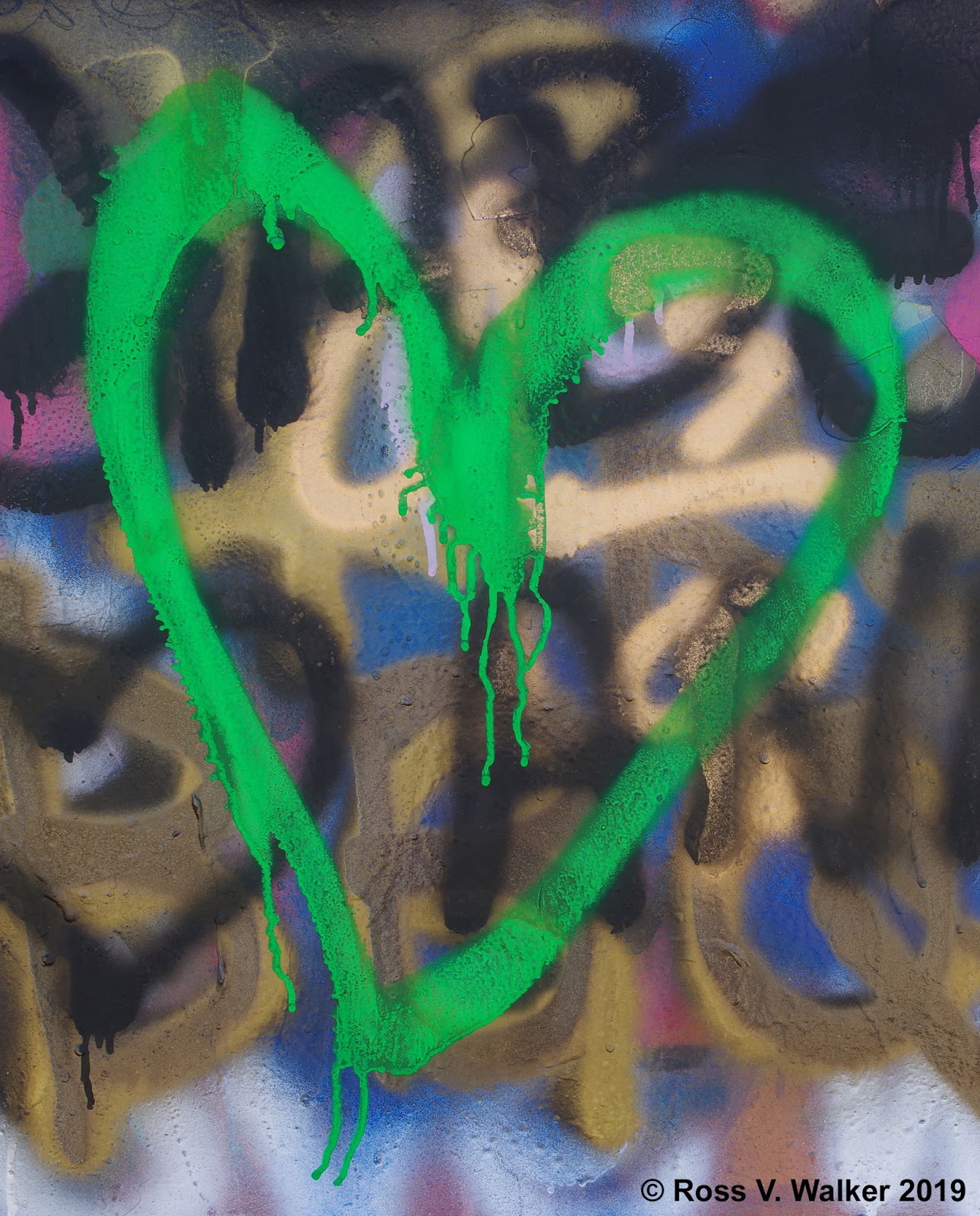
The vibrant colors include everything from love notes to abstracts and political messages.  I loved photographing it but had some reservations that I was merely copying someone else’s “art”.  So, it was a challenge to use the colors and designs creatively.

I hope you enjoy the photos, but please remember they are copyrighted and must not be used without my permission.

Friday, May 31, 2019

Painted Desert, Arizona


My most recent post showed petrified wood at Petrified Forest National Park in Arizona.  The other big attraction at the park is often called the “painted desert”.

The painted desert stretches across much of northern Arizona, so this national park covers just a small portion, but it is easily accessible here.  The brown debris near the center of this photo is probably fragments of petrified logs.


The layers of color were created over millions of years of change in the earth’s surface.  Earthquakes, volcanic ash, and flooding deposited layer after layer of different minerals, and erosion exposed them for us to see.


These hills are known as “the tepees”.


I only had a few hours to explore the park, but I noticed that the best petrified logs are in the south, and the best views of the painted desert are in the north.


The variations of color are just amazing, and this photo gives some idea of the vast uninhabited space around the Park.

There are other attractions in the park including petroglyphs, pueblo ruins, and a Route 66 monument.  It is well worth the trip.

Thanks for looking, but remember that these are copyrighted photos that can not be used without permission, and in most cases a reasonable fee.

Friday, May 17, 2019

Petrified Forest

I drove to Tucson last month to visit my son Brian and his wife Laura.  On the way back I took an extra day to explore Petrified Forest National Park near Holbrook, Arizona.  There are two main attractions there, the painted desert and the petrified forest.  Here is the story of the Petrified Forest.


Some people think they are going to see a standing forest here, but the trees turned to stone after they fell and were washed downstream and buried during the late Triassic period around 200 million years ago.


As millions of years passed, the buried logs absorbed water and silica from volcanic ash which crystallized into quartz which often kept some of the logs’ details.


Spectacular colors were added by various minerals.  The colors in this photo have not been altered.


The crystallized logs were harder than the soil where they were buried.  Over time, erosion removed the surrounding dirt and the logs surfaced.  Sometimes the logs helped reduce the erosion under them, leaving them balanced on a narrow ridge.


Many of the huge logs look like they have been sectioned with a chainsaw.  This happened when they were still buried and earth movement caused forces that snapped the crystallized logs like breaking glass rods.

The petrified logs are mostly in the southern part of the park, but if you go be sure to see the painted desert in the north as well.

I hope you enjoy the photos, but remember they are copyrighted.  Please don’t use them without permission.

Tuesday, February 19, 2019

Bear Lake Monster Encounter


I should have written about my encounter with the Bear Lake monster just after it happened, but I didn’t want trouble from the skeptics.  But since Idaho Magazine published my article about the event in the February 2019 issue, the secret is out.  I might as well talk about it.

It was a dark and stormy night.  Well actually, evening just after sunset, and Linda and I were camped at Bear Lake State Park on the east side of the lake in Idaho during July 2018.  A storm was dropping beautiful sheets of rain on the western mountains across the lake.  I set up my camera on a tripod to photograph the storm and hopefully get a lightning strike.  It got darker and darker, so my exposures got longer and finally I got a photo of some lightning.  The wind got stronger, indicating the storm was getting closer, so I knew I had to leave to avoid the lightning.  But just as I got ready to pack up the tripod I saw something leaping and bounding across the water coming right at me!  My first thought was the famous Bear Lake monster was coming to get me.  What else could it be?

I started taking photos as it got closer and closer, but it was dark and my photos of the charging monster were all blurry because of the long exposures.  The monster hit the beach nearly at my feet.  It was a giant black inflatable turtle that must have blown all the way across the lake from the west shore eight miles away.  Heart pounding, I packed up my gear and returned to our trailer just as the rain hit.


During the night a second thunderstorm hit, and when I looked for the turtle the next morning it was gone.  The wind must have blown it to Wyoming.

I’m glad the folks at Idaho Magazine thought enough of this yarn to publish it, and I got a kick out of telling the story.

Please remember, my photos are copyrighted and must not be used without permission.  I usually charge a reasonable fee to use them, except for charitable or academic purposes.

Saturday, February 9, 2019

Sun Dog


A sun dog is an atmospheric phenomenon that creates patches of light about 22° to the side of the sun.  Usually we see them on cold clear mornings here in the Bear Lake Valley, but this one showed up in the middle of a misty afternoon.

Suns dogs, or parhelia, are created by sunlight refracting through icy clouds of hexagonal crystals.  I was out looking for photo opportunities with Bruce Grayum when we saw this one from a back road near Georgetown, Idaho.  The cows didn’t seem impressed by the huge apparition in the sky near their pasture, but they did provide scale to show the size the sun dog.
It was a cold day, 9° F as we continued to explore.  We stopped at the bridge over the Bear River on the Nounan road and saw the sun dog again, but this time no clear sky was visible at all.  I liked the reflected light in the river.
Sometimes the arcs of light form a complete halo around the sun, and some have faint rainbows of color like this one.  Photographing them can be tricky because the camera must be pointed directly at the sun.  A clean lens is needed to prevent flares, and there is danger of getting a burned retina.  If your camera has it, live view might be a good option.
Our last stop was along Creamery Lane between Georgetown and Nounan where the sun dog appeared in icy mist over a winter landscape of drifts and sagebrush.  Shooting into the sun causes the lens to stop down, darkening the photo, but if the exposure is lengthened, the sun dog seems to blend with the sky and disappear.  I think the darkened exposure presents an other-worldly appearance anyway.

Why are they called “sun dogs”?  No one knows for sure, but the term has been around since the 1600’s and the origin seems to be lost in time.  Some say it is because the "dogs" follow the sun around.

I hope you like this post, but please do not use my copyrighted photos without permission.