Showing posts with label mating. Show all posts

Saturday, April 1, 2017

Garter Snakes Mating

Our huge snow pack in the Bear Lake Valley melted fast.  While there is still snow in the mountains, here on the valley floor we are dealing with a lot of water, and the smaller members of our wildlife community are appearing.
I was driving around the valley looking for photos of the flooded fields when I spotted these two intertwined common garter snakes (Thamnophis sirtalis) that had probably just emerged from hibernation.
I assumed they were mating, but after reading about them it is possible they were huddled together for warmth in our cold climate.  Some males are able to produce female pheromones which attract other males away from the den.  Then the first male ditches the pheromones and races back to the den where he hopes to have the females to himself.  This same technique tricks other males into “warming up” the trickster.
These snakes were very patient with me.  When I got down to their level, the smaller one stretched out toward the lens curiously, and I wonder if he was looking at his reflection.  Also, I wonder about the dusty color of these usually brilliant snakes.  Could it be that after emerging from hibernation their colors are dull until after they molt?  I just don’t know.

Please respect my copyright and do not use these photos without permission.

Sunday, April 3, 2016

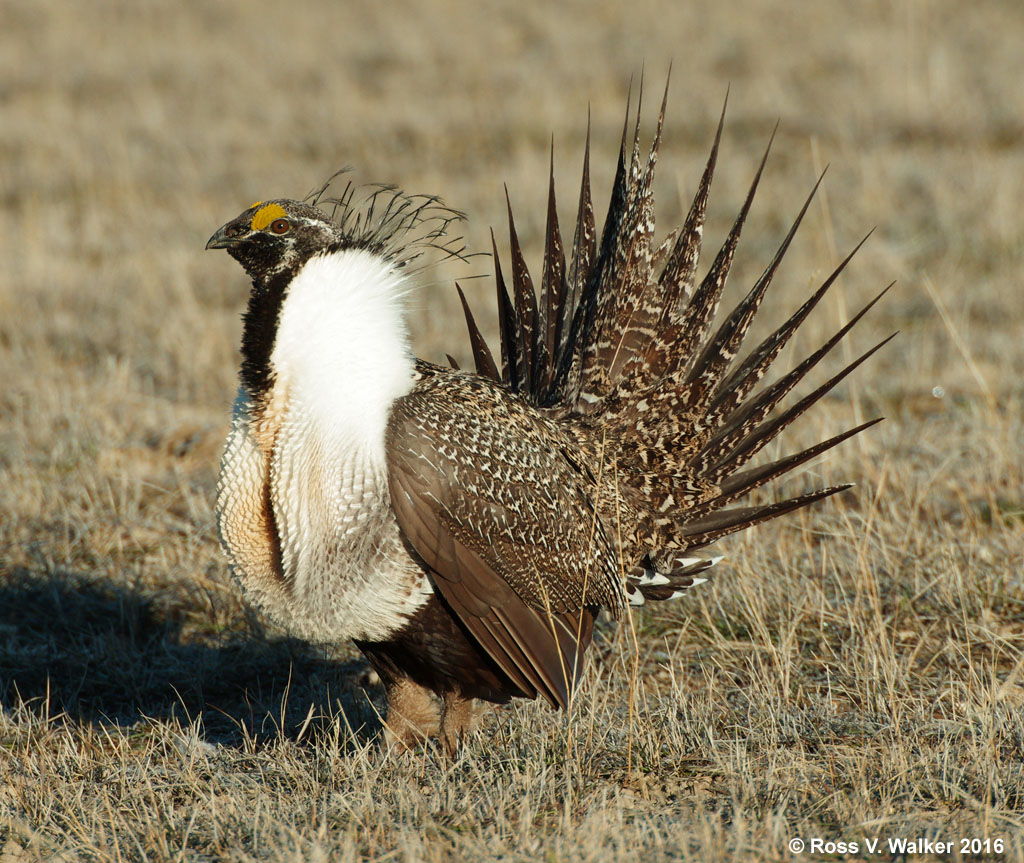
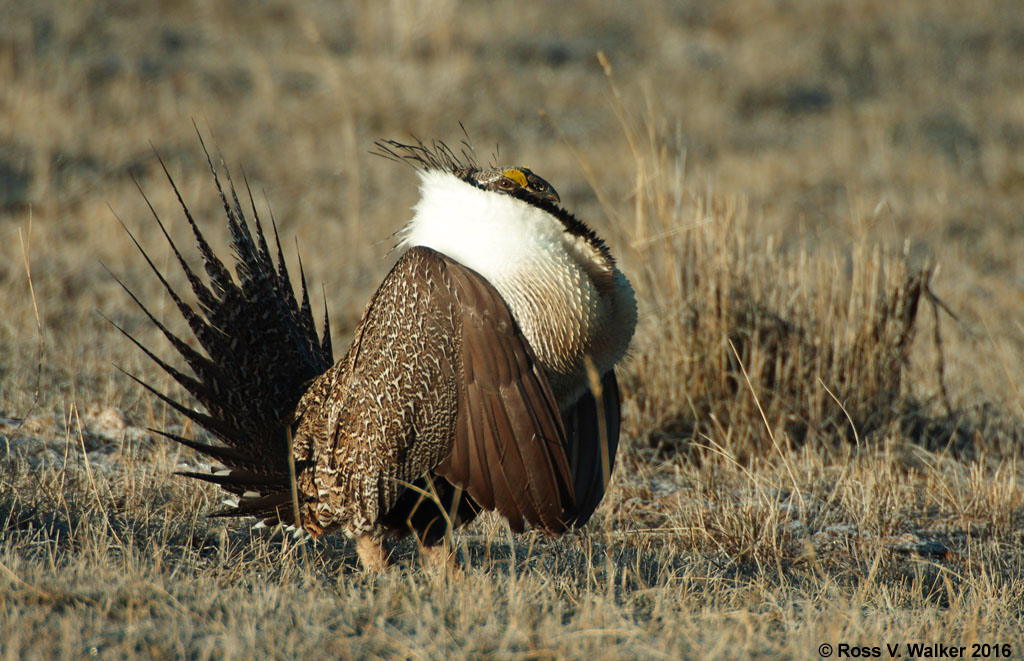
Greater Sage-Grouse

Jim Parker has been responsible for some of my best adventures in the Bear Lake Valley, Idaho area, and this one is near the top of my list.  Every spring the greater sage-grouse gather together and put on a courtship display in areas called leks.  These are relatively clear areas in the sagebrush where groups of males can do their best to attract the females.  The lek locations are not publicized to avoid conflicts with people.
Jim is really good at tracking down interesting things to photograph.  He picked me up at 6:15 AM and we drove to an area where he had seen grouse the previous day.  It was well before sunrise when we got there, and there were no grouse.  An hour or so later, the sun came up and we saw a few in the distance.  They were easy to see because of their bright white collars.  Jim put his truck in 4wd to drive across country where we found a lek with dozens of male sage-grouse.
The males put on a wonderful display, fanning their tails, strutting, and inflating air sacs in their chests.  Sometimes their heads almost disappeared into their feathers because the air sacs were so big.  They deflate these sacs with an audible POP, which I suppose is meant to be irresistible to the hens.
We were very close to the action, but most of the males didn’t seem to care and continued with their displays, but the females kept their distance.  After a half hour of watching and taking pictures we left, and we hope that the cautious hens came to the lek in response to these remarkable displays.  Just one or two dominant males will mate with all the females, so presenting an impressive display is really important.
The greater sage-grouse was considered for placement on the endangered species list, but that would have had a big impact on ranching, oil and gas exploration, etc.  An effort to improve sagebrush habitat had a positive impact on sage-grouse survival and avoided placement on the list, at least for now.

Please note that my photos are copyrighted and must not be used without my permission.