I haven’t been able to get out much lately, so this is my first post in a long time. I went with Bruce Grayum to Bear Lake National Wildlife Refuge and saw quite a bit of wildlife, including a few trumpeter swans. They are the world’s largest waterfowl, and were very rare here just a few years ago. Now there are several nesting pairs in the refuge, and they can be seen in several places in the valley.
There was one pair preparing to nest on an island in the biggest pond along the auto tour route. We could see the female dragging reeds into a pile for the nest.
Soon she left the nest and swam out to the male, then both took off and flew close to where we were watching. Because of there size, trumpeter swans need a long runway for takeoff.
The two swam together, often bobbing their heads, which is flirtatious behavior in the swan world.
They were beautiful to watch swimming together and I hope we will be able to see baby swans soon.
Thank you for viewing these photos. Please do not use them for any reason without my permission.
Photography discussion and photos by Ross Walker. There are photos from various shoots, and I plan to discuss photography tips and activities from our Sharp Shooters Camera Club. More of my photos are available at www.hisandhersphoto.com
Showing posts with label bird. Show all posts
Thursday, April 26, 2018
Trumpeter Swans Nesting
Labels:
Bear Lake,
bird,
flight,
Idaho,
national,
nest,
refuge,
swan,
trumpeter,
waterfowl,
wildlife
Location:
Unnamed Road, Montpelier, ID 83254, USA
Sunday, April 3, 2016
Greater Sage-Grouse
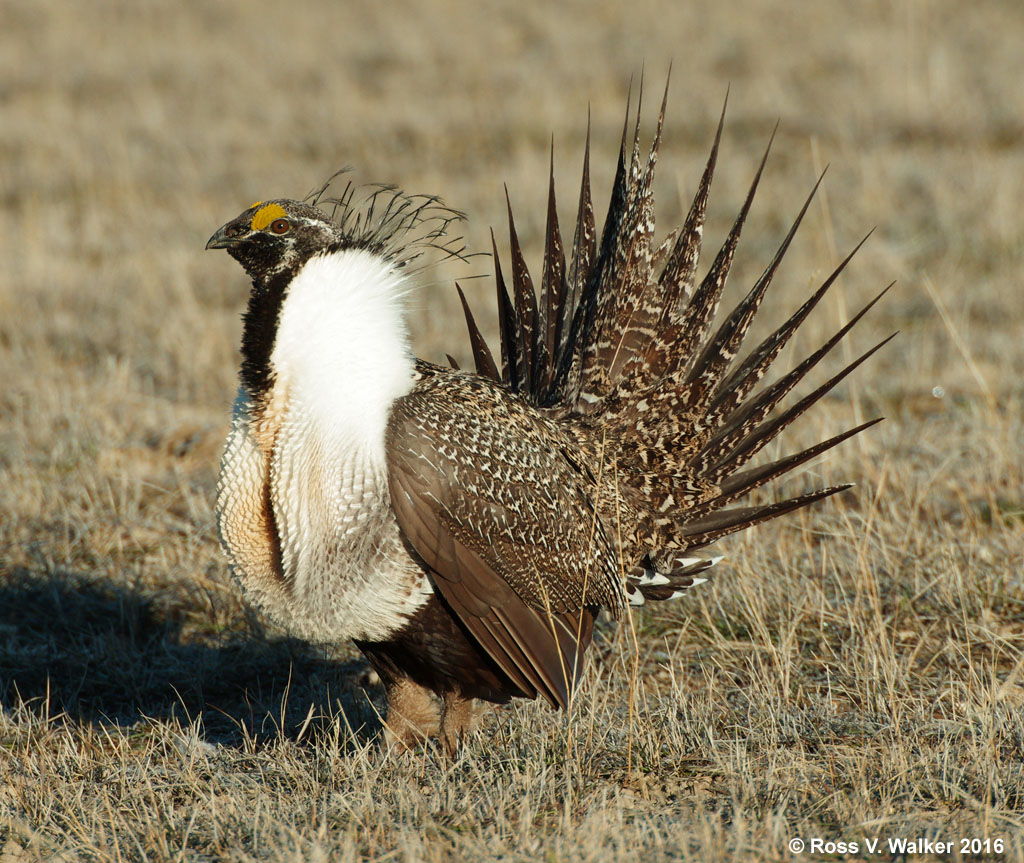
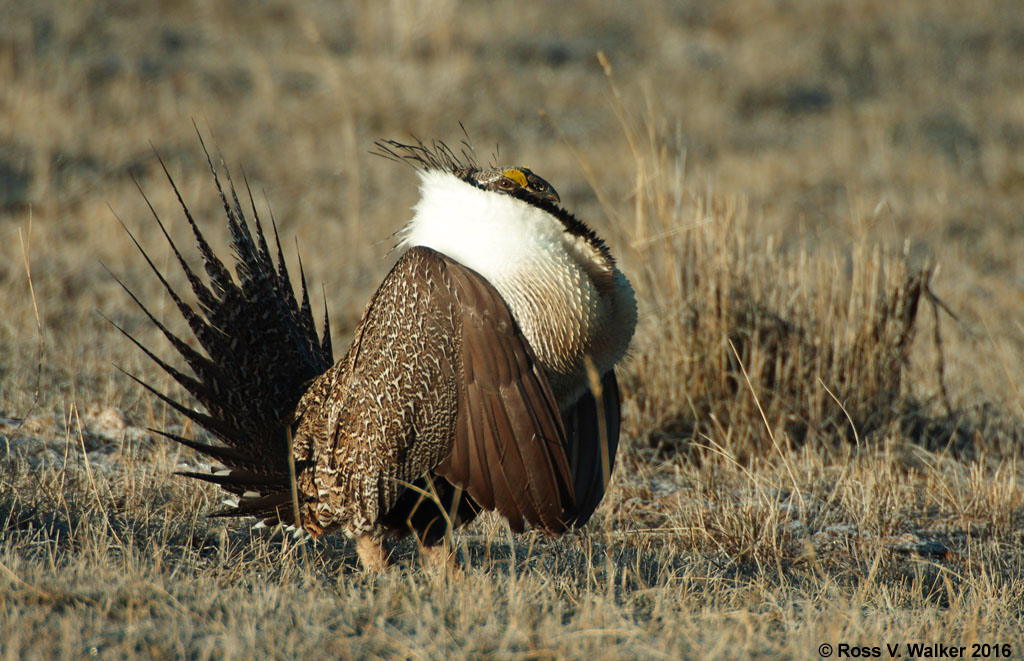
Jim Parker has been responsible for some of my best adventures in the Bear Lake Valley, Idaho area, and this one is near the top of my list. Every spring the greater sage-grouse gather together and put on a courtship display in areas called leks. These are relatively clear areas in the sagebrush where groups of males can do their best to attract the females. The lek locations are not publicized to avoid conflicts with people.
Jim is really good at tracking down interesting things to
photograph. He picked me up at 6:15 AM
and we drove to an area where he had seen grouse the previous day. It was well before sunrise when we got there, and there were no grouse. An hour or so
later, the sun came up and we saw a few in the distance. They were easy to see because of their bright
white collars. Jim put his truck in 4wd to
drive across country where we found a lek with dozens of male sage-grouse.
The males put on a wonderful display, fanning their tails,
strutting, and inflating air sacs in their chests. Sometimes their heads almost disappeared into
their feathers because the air sacs were so big. They deflate these sacs with an audible POP,
which I suppose is meant to be irresistible to the hens.
We were very close to the action, but most of the males
didn’t seem to care and continued with their displays, but the females kept
their distance. After a half hour of
watching and taking pictures we left, and we hope that the cautious hens came
to the lek in response to these remarkable displays. Just one or two dominant males will mate with
all the females, so presenting an impressive display is really important.
The greater sage-grouse was considered for placement on the
endangered species list, but that would have had a big impact on ranching, oil
and gas exploration, etc. An effort
to improve sagebrush habitat had a positive impact on sage-grouse survival and avoided
placement on the list, at least for now.
Please note that my photos are copyrighted and must not be
used without my permission.
Labels:
Bear Lake County,
Bear Lake Valley,
bird,
courtship,
display,
feathers,
grouse,
Idaho,
lek,
mating,
photography,
sage,
sage-grouse,
wildlife
Location:
Bear Lake County, ID, USA
Monday, May 14, 2012
Red-shafted Flicker
A female red-shafted flicker is hollowing out a nest in a cottonwood in a city park here in Montpelier, Idaho.
It took her about one-half hour to return to the nest after I parked close by.
Flickers are woodpeckers, and do an amazing job hollowing out nesting cavities with their beaks.
I had never seen behavior like this before. She would bring a beak-ful of wood chips to the entrance of the nest and spin her head as she dropped them out, so that they wouldn't accumulate in a pile at the base of the tree. This spinning motion is so quick that it is blurred in the photo.
Once she got the nerve to return to the nest, she ignored me and worked to enlarge the hole. Here she is, just before the head-spin to drop the wood chips.
When she is done, the nesting cavity will be 13 - 16 inches deep. The male normally helps the excavation, but may have been too scared to come around while I was there.
It took her about one-half hour to return to the nest after I parked close by.
Flickers are woodpeckers, and do an amazing job hollowing out nesting cavities with their beaks.
I had never seen behavior like this before. She would bring a beak-ful of wood chips to the entrance of the nest and spin her head as she dropped them out, so that they wouldn't accumulate in a pile at the base of the tree. This spinning motion is so quick that it is blurred in the photo.
Once she got the nerve to return to the nest, she ignored me and worked to enlarge the hole. Here she is, just before the head-spin to drop the wood chips.
When she is done, the nesting cavity will be 13 - 16 inches deep. The male normally helps the excavation, but may have been too scared to come around while I was there.
Labels:
bird,
flicker,
Idaho,
Montpelier,
nest,
red-shafted,
woodpecker
Location:
Montpelier, ID 83254, USA
Subscribe to:
Posts (Atom)